Street Photography Books That Actually Teach You Something
Photo Culture · 12 October 2026
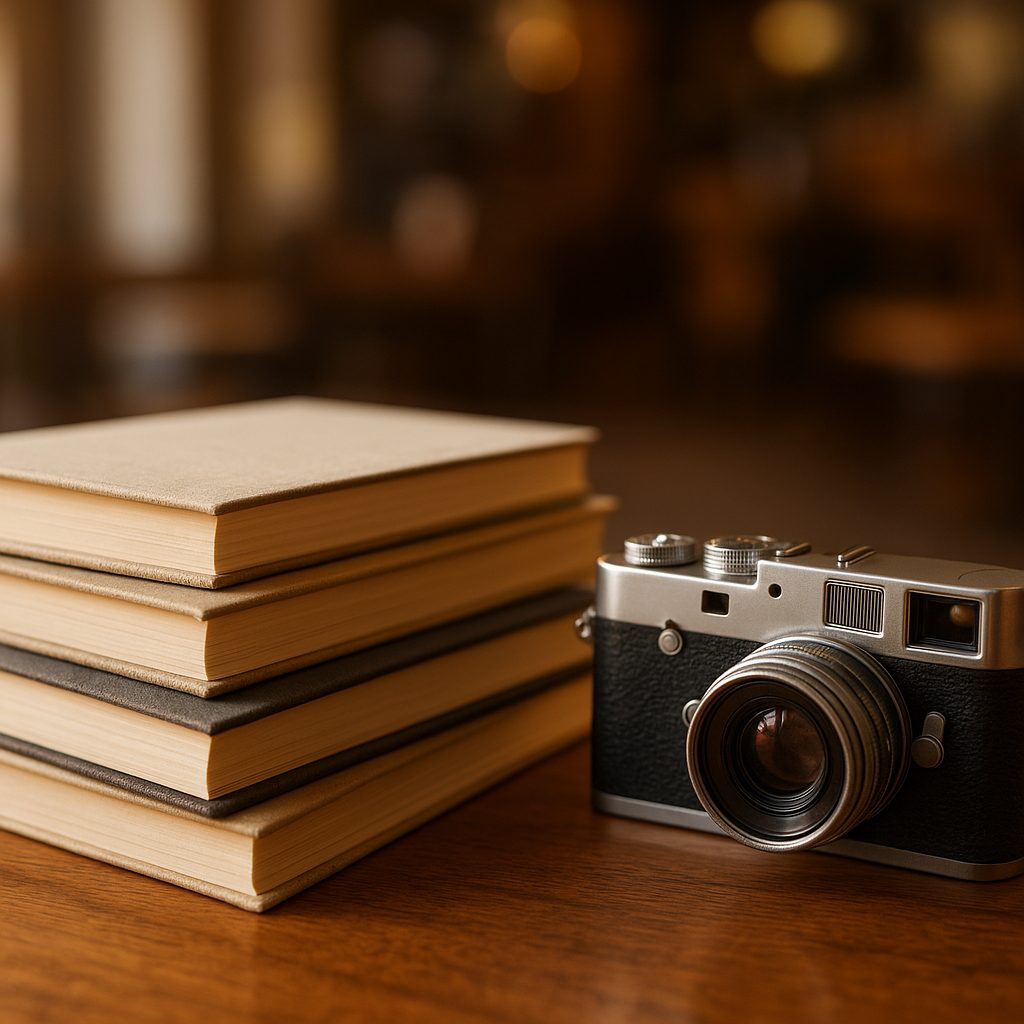
You can scroll a thousand street photographs in an evening and remember none of them, or spend a week with one good book and change the way you see for years. The feed shows you results; a book shows you a mind at work. This is not a list of famous titles to nod at — it is a shelf of street photography books chosen because each one teaches a specific, learnable thing, from composition and nerve to editing and patience. Read them slowly, with a pencil, and they will do more for your hit rate than any new lens.
Why a shelf beats a feed
A photobook is a finished argument. The photographer shot for years, edited ruthlessly, sequenced deliberately, and printed the survivors at a size and quality that does not forgive weakness. When you study a book, you are not looking at photographs — you are looking at decisions, hundreds of them, made by someone better than you. That is exactly the material improvement is built from.
Scrolling teaches taste without understanding. Books teach both, because a coherent body of work lets you reverse-engineer the method: you start noticing that every frame shares a working distance, a light preference, a kind of moment. That consistency is not a style; it is a system, and systems can be borrowed.
There is also the matter of trust. A book survived an editor, a publisher and the judgement of decades; the feed survived an algorithm that measured dwell time. When your eye is still forming, it deserves the stricter teacher.
The cornerstones: read these first
Robert Frank's "The Americans" is the book every serious street photographer eventually has to deal with. Shot on a Guggenheim road trip in the 1950s, it looks casual and is anything but. What it teaches is attitude as composition: Frank photographed flags, jukeboxes, funerals and lunch counters until a country emerged, proving that street photography can carry meaning far beyond the single clever frame. Read it to learn that a project beats a portfolio of unrelated hits.
Henri Cartier-Bresson's "The Decisive Moment" supplies the other half of the foundation — geometry and timing. Behind the famous title is a lesson in patience: find the stage, wait for the actor. His frames reward slow study, because the apparent accidents are all structure. If you want the history in one volume, add "Bystander: A History of Street Photography" by Colin Westerbeck and Joel Meyerowitz, which traces the genre from Atget to the present and explains why the rules you keep hearing about exist at all.
Books that teach colour
Most street advice assumes black and white, and colour is where most photographers quietly struggle. Saul Leiter's "Early Color" is the gentlest and deepest teacher available. Leiter shot New York through steamed windows, umbrellas and reflections in the 1950s, treating colour as weather rather than decoration. The lesson: you do not need bold colour everywhere — you need one controlled relationship between hues, and the discipline to exclude everything that breaks it.
Alex Webb's "The Suffering of Light" is the advanced course. Webb works at the edge of chaos — layered figures, hard tropical light, frames that seem about to collapse and never do. Study one of his photographs for five minutes and count how many separate events it holds; then ask why your eye accepts them all. The answer, almost always, is that colour and shadow are doing the organising. If his complexity feels out of reach, that is normal — it is a direction to walk in, not a standard to meet on Tuesday. Our guide to black and white street photography covers the monochrome side of the same craft.
Books that teach nerve and method
William Klein's "Life Is Good & Good for You in New York" is the book for photographers who shoot too timidly. Klein went close, used wide lenses, blurred, flashed, and broke every polite rule of the 1950s — and the pictures still look modern because the energy was the point. What it teaches is that commitment reads better than caution: a flawed frame made with intent beats a safe frame made from fear.
Daido Moriyama's work, especially the classic "Stray Dog" era, teaches the opposite temperament — the loner's drift. Grain, blur, tilt, repetition: Moriyama photographs a city the way memory holds it, not the way a brochure does. And for the single most useful book on process, "Magnum Contact Sheets" shows the great photographers' unedited film alongside their famous frames. Seeing that Cartier-Bresson's masterpieces sat among ordinary exposures — that everyone sprays, everyone misses — is worth more encouragement than a year of motivational posts. Pair that reading with deliberate practice using our street photography tips and you have a complete self-taught course.
How to read a photobook like a working photographer
First pass: go through fast, the way you would walk an exhibition, and mark nothing. Second pass: choose the ten frames that stop you and write one sentence each about why — distance, light, timing, gesture. Third pass: pick a single device — reflections, say, or figures at the frame edge — and hunt it through the whole book, noting how often and how differently it appears. Then, crucially, take that one device to the street for a week. Reading without shooting is entertainment; one borrowed device per book is an education.
Buy used where you can, borrow from libraries, and do not wait to own the perfect shelf. Two or three of these titles, read properly, will carry you further than owning them all unopened. And when your own work starts to cohere, take it where books end — to other eyes, at a festival critique or a photography workshop — because the final lesson of every good photobook is that somebody, eventually, has to look.
Field note. Many classics are out of print and priced accordingly. Do not pay collector prices to learn: library copies, affordable reissues and exhibition catalogues teach exactly the same lessons as first editions.