Black and White Street Photography: A Complete Guide
Photo Culture · 3 July 2025
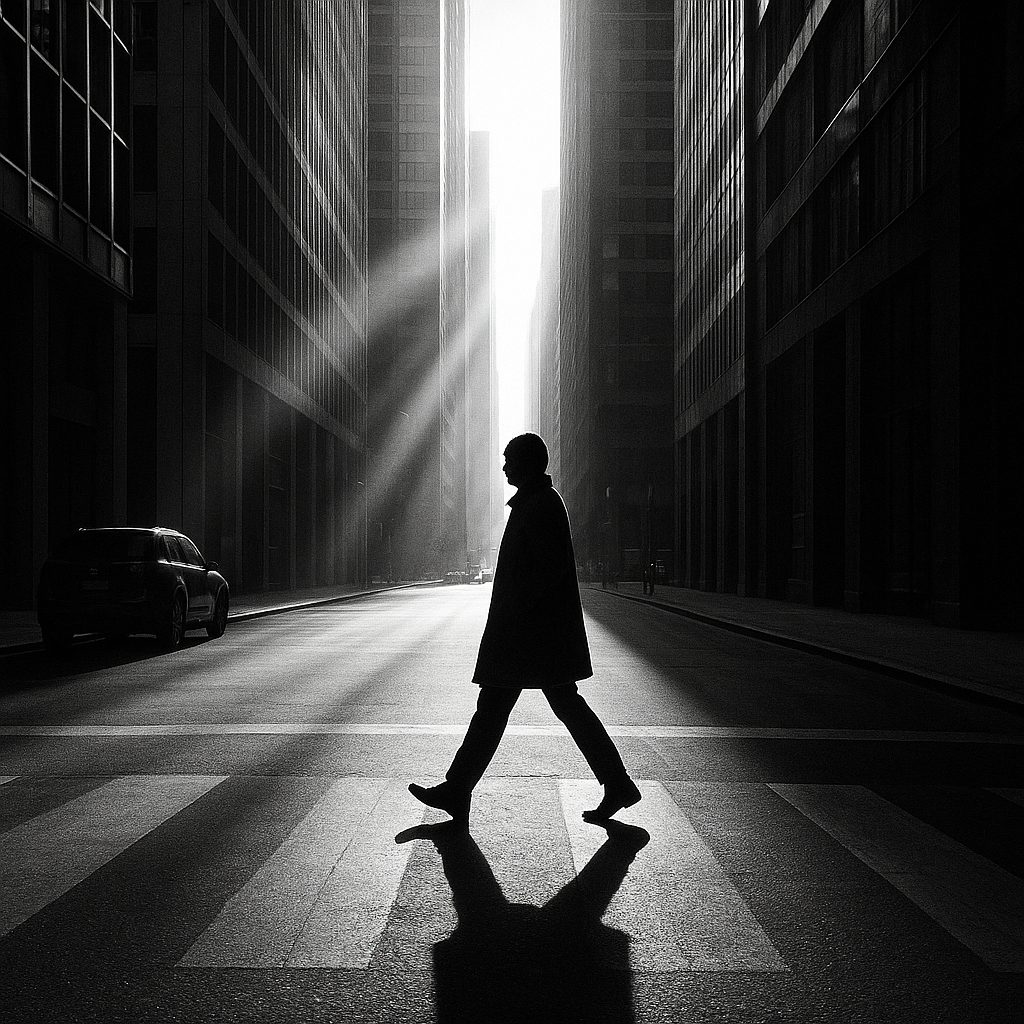
Colour describes the street; black and white interprets it. Strip colour away and a photograph stops being a record of what a corner looked like and becomes a statement about shape, light and gesture — which is why the monochrome street tradition has outlived every technical reason for its existence. But black and white street photography is not colour photography minus saturation. It is a different way of seeing, and it has to be learned on purpose.
Learn to see in tone, not colour
The first skill is translation. A red jacket against a green door is a bold colour contrast and, in monochrome, nearly the same grey. Conversely, a pale face against a dark doorway — unremarkable in colour — becomes graphic drama in black and white. Train yourself to evaluate scenes by luminance: where are the lights, the darks, and the separation between subject and background? Squinting helps, literally; it collapses detail into masses of tone until the scene reads as pure light and dark. Some photographers set their camera's preview to monochrome while shooting raw, so the screen shows the tonal picture while the file keeps everything. It is an honest teaching tool, especially in the first year.
Chase hard light and deep shadow
Midday sun, which colour photographers flee, is the black and white street photographer's collaborator. Hard light carves the city into geometry: blades of brightness between buildings, shadows that become compositional elements in their own right, figures half-dissolved into black. Learn your city's light map — which streets become canyons of contrast at which hour — and return to those stages deliberately. Overcast days are not lost either; flat light gives you gentle tonal gradations and forces attention onto gesture and expression. Rain is a gift both ways: wet pavement doubles every light source and turns the street into a tonal mirror. Keep a mental log of these conditions and the frames they produced; after a season you will know which weather sends you out the door fastest, and that self-knowledge is worth more than any preset.
Compose with shape and line
Without colour to organise the frame, composition carries everything. Work with silhouette, shadow edges, leading lines and the negative space around your subject. Look for tonal separation before you raise the camera: a dark coat against a lit wall, a white shirt emerging from shade. Get closer than instinct suggests — a subject lost in mid-tones is the monochrome equivalent of a missed focus. Many of the working habits in our street photography tips piece — finding a stage, waiting, working the scene — apply doubly here, because a strong patch of light is the best stage the city offers, and it never lasts.
Gesture becomes the subject
Colour photographs can coast on palette; monochrome photographs cannot. What carries a black and white street frame is gesture — the angle of a body, the turn of a head, two figures rhyming across a crosswalk. This makes timing even more decisive. Anticipate rather than react: watch how people move through the space you have framed, predict the peak of the movement, and shoot slightly before it arrives. A half-step early is a sharp picture of a moment; a half-step late is a picture of where a moment used to be.
Expose for the conversion you intend
Shoot raw, always — the tonal decisions belong at the desk, not in a baked-in JPEG. In exposure terms, protect the highlights: blown white contains no information, while shadow can be lifted within reason. Slight underexposure in contrasty scenes keeps the lit areas alive, and modern sensors forgive a stop or two of shadow recovery. Slower shutter speeds, motion blur and high ISO grain are not enemies in this genre; grain especially has a long monochrome pedigree, and a frame that is technically imperfect but tonally alive will beat a clean, dead one at every edit.
Convert with intent, not a preset
Conversion is where black and white street photography is won or lost. Start from the channel mixer or colour-channel sliders rather than the saturation knob: darkening the blue channel deepens skies and shadows, lifting reds brightens skin — the file remembers the colour even when the picture does not. Then shape the tonal curve to taste. The genre's classic look keeps true blacks and bright whites with a rich mid-tone ladder between; a common beginner error is the muddy, all-grey frame with neither anchor. Add contrast locally — dodging a face, burning a distracting corner — the way darkroom printers always did. Restraint is the signature of confidence: if every slider is at an extreme, the conversion is wearing the picture rather than serving it.
Ethics travel with the format
Monochrome has a way of aestheticising hardship — poverty rendered in silver tones can look like style rather than someone's life. The abstraction that makes black and white powerful makes it easier to forget there is a person inside the composition, so the same questions about dignity, vulnerability and consent apply with extra force. Our piece on street photography ethics works through them properly, and it belongs on the reading list of anyone drawn to this genre's grittier corners.
Build a body of work, not a pile
Black and white rewards series thinking. A single strong frame is an accident; thirty frames that share an eye are a voice. Edit in sequences, print small workprints and live with them on a wall, and notice which tonal world is genuinely yours — deep noir, soft grey lyricism, graphic hard edge. When the series holds together, it is ready for the wider world: a themed photography competition, a festival portfolio review, or eventually a wall of its own — our guide to staging a photography exhibition covers that final step.
Field note. Resist converting weak colour frames to "save" them. Monochrome forgives many things, but not a photograph with nothing to say; the conversion will only make the silence grey.