Street Photography Ethics: Shooting Strangers with Respect
Photo Culture · 20 November 2025
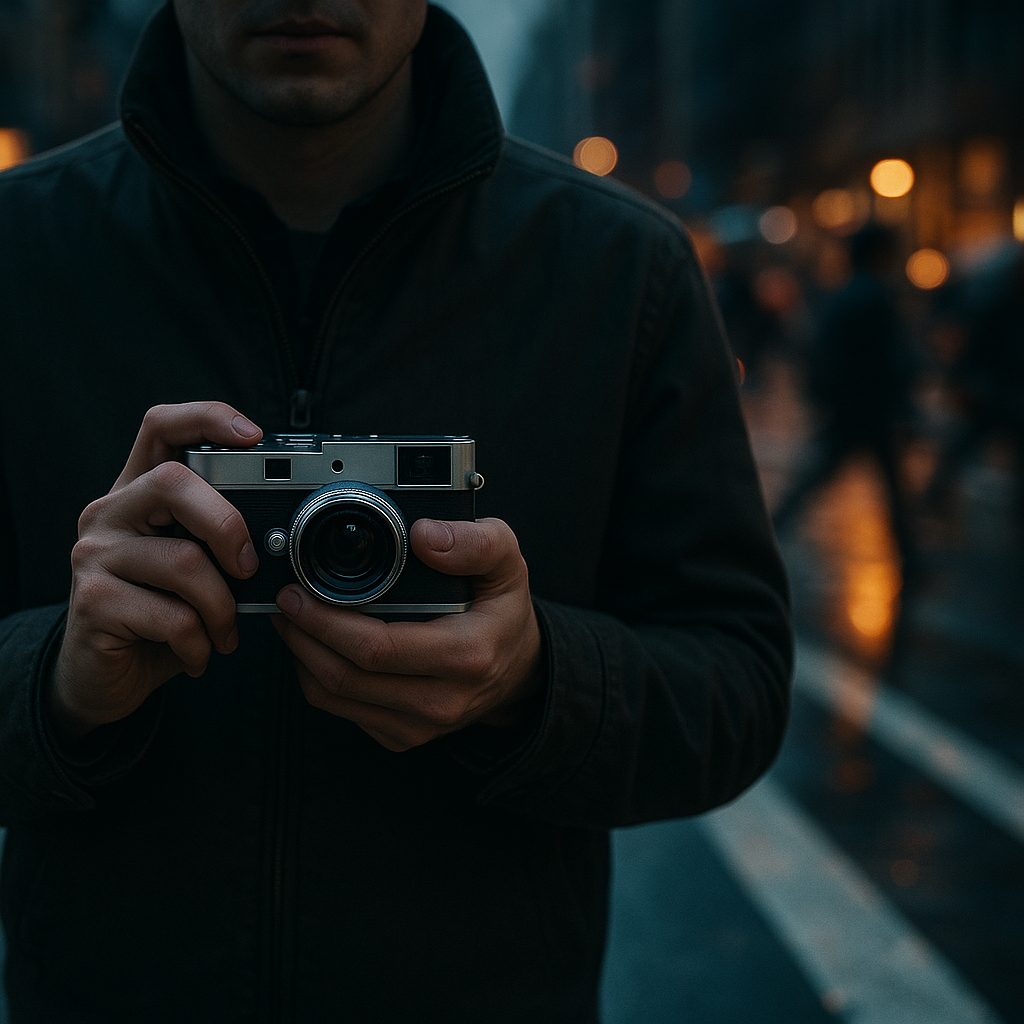
Street photography lives on a tension it can never resolve: the pictures that matter most are usually the ones nobody posed for. That tension is not a problem to eliminate — it is the genre's engine — but it demands that photographers think clearly about what they owe the strangers in their frames. Legality is the floor of this conversation, not the ceiling. This piece is about everything above the floor.
Legal is not the same as right
In most countries, photographing people in public space is lawful. That fact ends many internet arguments and should end none of your thinking. Legality describes what the state permits; ethics describes what the person in front of your lens might reasonably expect. A photograph can be perfectly legal and still exploit someone's grief, poverty or embarrassment for aesthetic gain. The law will not tell you which frames those are. You have to develop that judgment yourself, before the moment arrives — because on the street, moments do not wait for deliberation.
A useful working question is not "may I take this?" but "what am I taking?" A gesture, a quality of light, a slice of city life — or a person's dignity, repackaged as your composition. The difference is often invisible in the frame and unmistakable in the intent.
Vulnerability changes the equation
Not every stranger occupies the street on equal terms. Children, people in crisis, the visibly homeless, the intoxicated, the grieving — all are present in public, and all are diminished in their ability to consent or object. Photographing them is not automatically wrong, but the burden of justification shifts entirely onto the photographer. Ask what the picture adds to the world beyond your portfolio. If the honest answer is "nothing, but it looks powerful," leave it untaken.
The same logic applies across cultural lines. In some communities a camera pointed without introduction is an act of aggression; in others it is a commonplace. The traveller's duty is to learn which street they are standing on before raising the camera, not after.
The power you carry without noticing
Every street photograph is an exercise of power, however gentle: one person chooses the frame, the moment and the meaning, while the other supplies the raw material without negotiation. Most photographers feel this dimly and prefer not to examine it, because the examination is uncomfortable. But the imbalance is not shameful — it is simply a fact to be managed honestly. The camera also confers a strange asymmetry of consequence. For you, a frame is one of thousands; for the person in it, it may become the image by which strangers know them, circulated beyond any context they agreed to. Holding both truths at once — the legitimacy of the work and the reality of the imbalance — is what separates a reflective practitioner from someone merely collecting faces. Photographers who accept the power they hold tend to wield it more carefully, and paradoxically more freely, because they stop wasting energy pretending it is not there.
Consent has more than one form
The genre's mythology celebrates the invisible photographer, but much of its greatest work was made by people who were plainly, sometimes confrontationally present. Presence changes the transaction: your subject can see you, react, object, perform, ignore you. Each reaction is information you owe them the chance to provide. Working visibly — camera at eye level, demeanour open — is not just braver; it produces a different, often richer kind of picture, because it acknowledges that a photograph of a person is a relationship, however brief.
After-the-fact consent matters too. When someone notices and objects, the respectful default is engagement, not retreat behind legal doctrine. Explain what you are doing. Offer to show the frame. Delete when the request is reasonable and the picture is not precious. A single photograph is rarely worth a stranger's bad day.
Context follows the frame forever
A street photograph outlives its moment, and context decays around it. An image that read as gentle irony on a contact sheet can read as cruelty on a gallery wall, on a book page, on a screen in another country. This is where ethics extends beyond the instant of exposure into editing and presentation. Captions, sequencing and titles are moral instruments: they decide whether your subject appears as a person or as a specimen. The discipline of presenting people with context and care is the same one that governs a strong exhibition edit — what you include, what you leave out and what you say about it are one continuous act of authorship.
What festivals and juries now expect
The professional world has moved. Festivals, editors and juries increasingly ask how documentary work was made, not only what it shows; questions of consent and power appear in open call terms and review conversations with growing regularity. Photographers who have thought through their own working code arrive at those conversations prepared — and the thinking itself tends to improve the work. If you plan to submit street work to competitions, expect to discuss method alongside aesthetics, and treat that expectation as a sign of a healthier culture rather than an obstacle.
A personal code beats a borrowed one
No universal rulebook survives contact with the street. What does survive is a small set of personal commitments, decided in advance: who you will not photograph, how you will respond to objection, what you will do with images that make you uneasy a year later. Write yours down. Revise it when a picture teaches you something. Share it when younger photographers ask, not as doctrine but as an invitation to build their own. The goal was never a spotless conscience — it is work that can look its subjects, and its audience, in the eye.
Field note. Laws on photographing people vary sharply by country and change over time — some jurisdictions recognise image rights even in public space. Check the current rules of wherever you plan to work, and never assume the habits of your home street travel with you.