Photography Exhibition: How to Find Shows Worth Seeing and Stage Your Own
Photo Culture · 17 February 2025
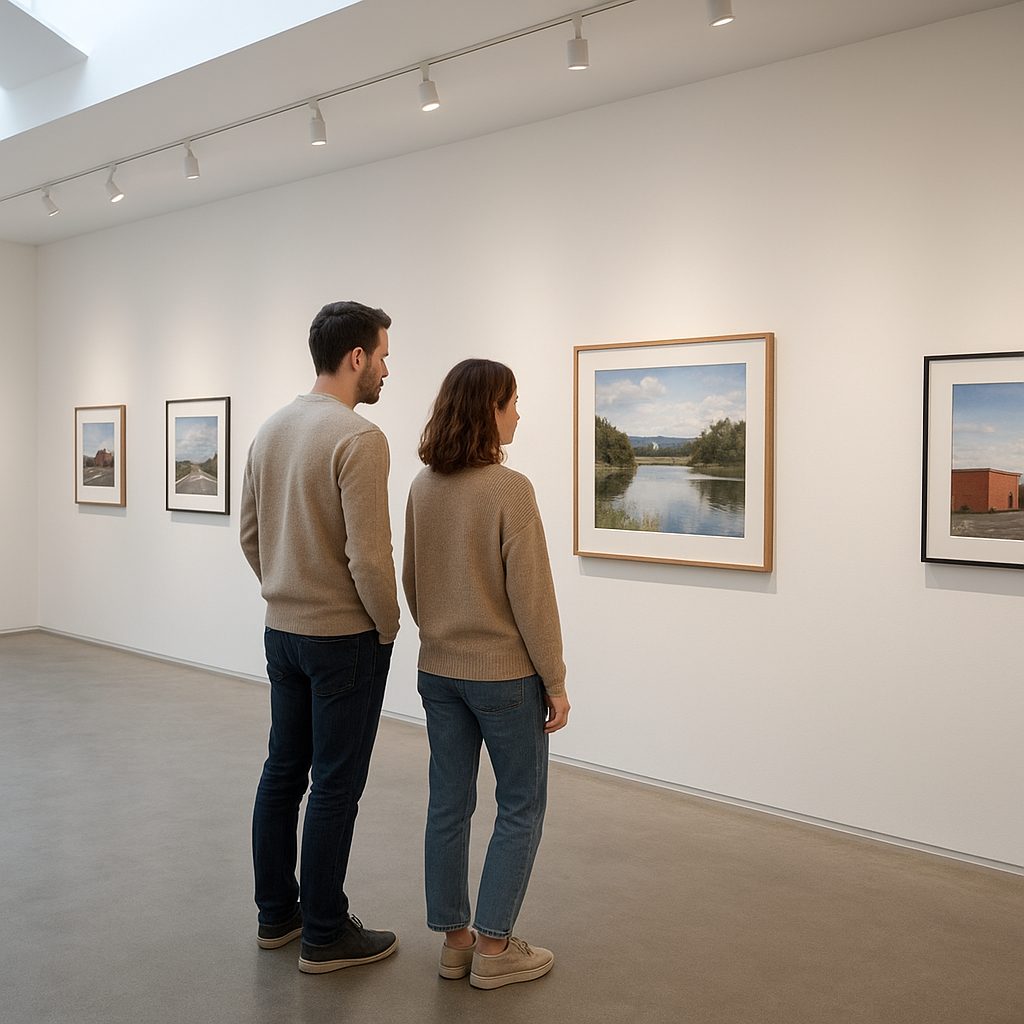
A photography exhibition is still the genre's true home: the wall is where prints breathe, sequences make sense and scale does its quiet work. Yet most people see photography only as a feed. This guide covers both sides of the wall — how to find exhibitions genuinely worth your time, wherever you are, and what to do when the day comes that the work being hung is your own.
Where photography exhibitions actually live
The obvious addresses are the dedicated institutions: photography museums, photo galleries and the media arts centres of any large city. But some of the best shows hide elsewhere — in university galleries, cultural institutes of foreign embassies, public libraries, photography bookshops with a back room, and the fringe spaces that appear whenever a festival takes over a town. Make a habit of checking the exhibition listings of your nearest city's art monthly and the programmes of photography festivals within travel distance; a festival weekend routinely concentrates twenty or thirty shows into a few streets.
Online, follow the institutions and curators rather than the algorithms. Mailing lists are unfashionable and unbeatable: a gallery's newsletter tells you about the opening; a social feed tells you about it three days later, mixed with lunch.
Choosing which shows to see
You cannot see everything, so develop filters. Retrospectives and themed group shows curated around an idea tend to teach the most; they show you how an editor thinks. Solo shows by photographers whose work you half-like are often more useful than shows by your heroes — disagreement makes you articulate what you believe. And always check what a "photography exhibition" actually contains: the word covers everything from museum-grade original prints to inkjet posters of files pulled from a hard drive. Neither is automatically better, but you should know which you are travelling for.
How to visit, once you are there
Walk the whole exhibition once without reading a single label, and notice which images stop you. Then go back and give those images your real time — minutes, not seconds. Read the wall texts after looking, not before, so the words answer your questions instead of replacing them. If photography is permitted, photograph the installation views rather than individual pictures; the hang — sizes, spacing, sequence — is the curatorial argument, and it is the part you cannot get from a book. Two hours in one show beats twenty minutes in five. Leave time to sit with the catalogue in the café afterwards; that is when the visit settles into memory. If the show offers a guided tour or an artist talk, take it once — hearing a photographer speak about prints on the wall in front of you compresses years of solitary looking into an hour. And keep a small notebook, not for transcriptions of wall texts but for the single sentence each exhibition leaves with you; a year of those sentences is a private education in curating.
Getting your own work onto walls
Nobody's first exhibition is a museum solo show, and that is fine — the ladder has many rungs and the lower ones matter. Group shows from open calls are the standard entry point: galleries, festivals and photography centres publish them constantly, and a well-run photography competition often ends in an exhibition of the winners, which is one of the strongest reasons to enter. Café walls, community centres and small independent spaces are legitimate venues; a finished, well-hung show in a modest room teaches you more than an unfinished fantasy about a famous one.
Curators and gallery owners find work the way everyone does now — through recommendations, festival portfolio reviews, and bodies of work visible online that show a consistent eye over time. What opens doors is not a single brilliant image but evidence that you finish things.
Preparing the work
An exhibition begins with an edit, and the edit is brutal: a coherent show of fifteen images beats a comprehensive one of forty. Choose one body of work, not a greatest-hits reel. Print test work early, at final size if you can, because a file that glows on screen can die on paper — check shadow detail, contrast and how the prints behave next to each other as a sequence. Decide on presentation before you spend: framed prints, mounted prints, or unframed prints pinned in a grid each cost and communicate differently. Budget honestly for printing, framing, transport and the venue's costs, and write the texts — the short artist statement and the wall labels — weeks in advance, not the night before the hang.
Hanging and opening
Hanging is a craft. Standard practice puts the centre of images at a consistent eye level, roughly 150–155 centimetres, and lets sequence do the storytelling: a strong opener, a rhythm of quieter and louder images, a closing frame that stays with people. Light the work evenly and at the prints, not the room. At the opening, be present and talk to strangers about the work — that is half the point of the whole enterprise — and collect contacts properly, with a guest book or a sign-up sheet. Price any work for sale before the doors open, with a printed price list, and decide in advance whether you will sell framed pieces off the wall or take orders; improvising this in front of a buyer never goes well. After the show, photograph the installation for your records and send a short thank-you to everyone who helped. If the experience leaves you wanting to go deeper into the craft, a focused photography workshop is often the fastest next step, and the about page explains why we cover this world.
Field note. Insure or accept the risk before work leaves your hands, and get every arrangement with a venue in writing — dates, costs, commission on sales, who hangs, who repairs a frame damaged by a visitor. Friendliness and paperwork are not enemies.